Well, in searching through my pyramid of boxes of books, I amassed a whole separate box of duplicates (3 copies of Walden, 3 copies of A Portrait of the Artist as a Young Man, 2 copies of several Dostoyevsky novels, and 2 sets of the Lord of the Rings Trilogy—plus, lots of odds and ends that I decided aren't worth holding onto anymore. I took the whole load over to The Book Rack ("Holly's Book Rack" for us locals who know that it is the only such book-place with a 50-mile radius) and browsed their small section of CLASSICS, nestled in the back behind INSPIRATIONAL FICTION, MYSTERY, and short, squat ROMANTIC bricks as far as the eye can see. They had a surprising amount of treasures there on the "literature" shelves. I actually had to choose between an older edition of Thoreau's Cape Cod accounts, fittingly titled Cape Cod and a strangely neon and pink edition of Hannah Arendt's On Violence. Also, I had both Thomas Pynchon's Vineland weighed against a potentially fascinating piece of agricultural travelogue by the USDA's chief soil conservationist in the 1900s entitled Farmers of Forty Centuries, which details the sort of sustainable, long-term farming and social practices he encountered in a sweeping tour of rural and urban regions of Japan, China, and Korea. Lastly, I had Gary Snyder's Turtle Island set up against collected essays by Mark Twain, Tennessee Williams' The Glass Menagerie, and a few other choice selections.
What to do?
Well, in case you couldn't tell in my epic description of this brief shopping trip, I ended up with the following:
Gary Synder - Turtle Island (with "Four Changes")
Henry David Thoreau - Cape Cod
F. H. King - Farmers of Forty Centuries
Next up: pulling out and chronicling the heap of books I read/collected on my bike journey out west.
8.14.2009
Today's Book Trade

5.09.2009
The End (of the Beginning?)
Well, instead of writing some of my last 50 or 60 pages in college (due in less than a week), I thought I'd take this chance to make a little blog post. I spent most of last night (until dawn) combing through a handful of books and articles related to the theme of everyday life, cooking, neighborhoods, politics (Lefebvre and Situationist International?), poetry, and Sufi and Christian mysticism (à la Rumi, Simone Weil, and others). It's a fascinating set of literatures that I hope I can immerse myself in further in the years ahead. It just resonates with me. However, it seems extra tricky and the stakes seem higher when you try to make a theoretical research project out of something for which the whole point is to be untheorized, everyday, common, practical, quotidian, unexplainable, and so on. Finding a way to further discuss and analyze "the practice of everyday life" in all its religious and spiritual significance might be something I have to think about a lot in the future.
Anyways, I'm getting ready to graduate and hit the road, which means a big change in reading habits—potentially for the better, but I'll have to make some serious adjustments, either way. This blog will hopefully be set up for some remote/mobile (what's the techno-lingo these days?) posts, at least to give you the titles of what I get my hands on. Of course, I'm not sure how many books I'll be able to freight along in my panniers... maybe I should have someone mail boxes of books to different stops along the way?
12.23.2008
Fall 2009
Besides purchasing books at the beginning of each semester, this listing and summarizing process on the other side of classwork is perhaps my favorite part of being a student. I don't even feel bad if I end up being self-congratulatory, because I love books. So if anyone ever looks at these lists and thinks I'm one of those twisted, cocky, malignant bookworks, well, you're right. But I'll lend you some of my books, if you ask nicely.
This past semester was almost certainly the busiest of my academic career thus far. After a relaxed summer of half-hearted reading endeavours, I was amazed at how much reading can occur once you have 5 or 6 professors making all sorts of unreasonable demands on your time and eyesight. If I could read as much during breaks as I do during peak levels of activity during the semester, I would be able to polish off my "Read Before Dying" list in no time. Just for the record, I've listed below all the books I've engaged with in the past 3.5 months, including those books which I didn't quite finish but spent some serious time with nonetheless but not including articles, handouts, course reading packets, online selections, or books from which I read minor excerpts.
And how about some subject categories, eh?
Mr. William Shakespeare:
Much Ado About Nothing
Othello
As You Like It
The Tempest
Henry 5
King Lear
The Merchant of Venice
Measure For Measure
Gabriel Egan - Green Shakespeare: From Ecopolitics to Ecocriticism
James Shapiro - 1599: A Year in the Life of William Shakespeare
Literature:
Lisa Russ Spaar - Satin Cash
The Norton Anthology of Interviews
Nicole Krauss - The History of Love
Seamus Heaney (translator) - Beowulf
J.R.R. Tolkien (translator) - Sir Gawain and the Green Knight, Pearl, Sir Orfeo
Bede - Ecclesiastical History of the English People
Sir John Mandeville - The Travels of Sir John Mandeville
The Old English Elegies
Medieval English Verse
Norton Anthology Of Literature: The Middle Ages
Julian of Norwich - Revelations of Divine Love
Jennifer Neville - Representations of the Natural World in Old English Poetry
Clare A. Lees and Gillian R. Overing (editors) - A Place to Believe In: Locating Medieval Landscapes
Philosophy:
James K.A. Smith - The Fall of Interpretation
Saint Augustine - De Doctrina (Teaching Christianity)
Martin Heidegger - Being and Time (I'll be able to officially add this to the list after my Contemporary Continental class this spring)
Jacques Derrida - Speech and Phenomena
Roger Poole - Kierkegaard: The Indirect Communication
*
Karl Marx and Frederich Engels - The Communist Manifesto
Karl Marx - Writings of the Young Marx on Philosophy and Society
Karl Marx - Capital
Michael Hardt and Antonio Negri - Empire
Hernando de Soto - The Mystery of Capital
*
Descartes - Meditations on First Philosophy
G.W. Leibniz - Discourse on Metaphysics
David Hume - An Enquiry Concerning Human Understanding
Thomas Reid - Inquiry and Essays
Immanuel Kant - Prolegomena to Any Future Metaphysics
Peter Singer - A Very Short Introduction: Hegel
Søren Kierkegaard - Philosophical Fragments
Karl Marx (and Frederich Engels) - The German Ideology
Frederick Nietzsche - Twilight of the Idols
Summer 2008
This past summer didn't work out incredibly well for my lofty reading ambitions. My intermittent work on the farm and for Jamie got me going with some horticulture and some reading in contemporary philosophy of religion (of the continental variety), but I chose to spend most of my time between these projects with cooking and a little travel.
- top 5 + 1:
Jorge Luis Borges - Labriynths: Selected Stories and Other Writings (5 stars)
Eileen Weppner - The International Grandmothers' Cookbook (Favorite Recipes Of Grandmothers From Around The World) (5 stars)
James Tate - The Ghost Soldiers (4 stars)
Wendell Berry - Life is Beautiful (4 stars)
Kevin Huizenga - Curses (4 stars)
Elizabeth Wilson - Bohemians: The Glorious Outcasts (4 stars)
- assorted other titles:
J.D. Salinger - Franny and Zooey (4 stars)
Rolf Potts - Vagabonding (4 stars)
James Shapiro - 1599: A Year in the Life of William Shakespeare (3 stars)
John D. Caputo - On Religion (3 stars)
Jonathon D. Culler - A Very Short Introduction: Literary Theory (3 stars)
Douglas Coupland - Girlfriend in a Coma (2 stars)
Marcus A. Webb - The Herb and Spice Companion: An A to Z Guide (2 stars)
2.26.2008
Late Fees?
A couple of days after arriving at York, I went with Brad and John to the public library. The only necessity of our trip was to procure a library card for local discounts and such, but of course we also managed to pick up a truckload of books. Now, I'm pretty proud that I've managed to actually finish more than half of them, and have spent a little time with each and ever one. That's pretty good for me. But, the due date is already past and thus I am forced to return them before I would like. Here's a record of their life with me, though, before they're returned to the shelves. Who knows if anyone else will spend time with them or love them ever again?
C.K. Stead - "The New Poetic"
- an analysis of British poetry from early Yeats through the Georgians and War Poets up to Eliot's "Four Quartets," this influential book/essay uses a very potent model for tracking the relationships between poet, audience, and subject matter and ends up arriving at the central discussion of what poetry is and does
Czeslaw Milosz - "Facing the River"
- I finally found an actual collection of Milosz's poems and was greatly rewarded; I would highly recommend this dark but fertile revelation of Milosz's mind and life, one of his last
Billy Collins - "Nine Horses" and "Taking Off Emily Dickinson's Clothes"
- more clever, quirky, occasionally moving, but above all casual poetry from this laid-back master of easy-going poems
Samuel Beckett - "For To End Yet Again and Other Fizzles"
- inciting mind/word-play akin to James Joyce; an intriguing experimental form (or poetry?) but not sustainable beyond the few pages of each individual fizzle
Seamus Heaney - "District and Circle"
- I enjoyed his direct engagement with other writers and his impressive lexicon--an expansive mix of local-feeling Anglo-Saxon words littered like rocks or peat amongst international landscape of bamboo and Italian architecture--but overall, I had trouble engaging the poems
Ezra Pound - "Poems selected by Thom Gunn"
- I read Gunn's brief introduction and a few excerpts--I'm still not sure what I think of Pound, beyond the obligatory nod for his midwifery role in Modernist poetry
Luigi Pirandello - "Collected Plays"
- again, the introduction was informative, but I didn't have time to actually read any of the actual plays
Deitrich Bonhoffer - "Ethics"
- I glanced over the section on Vocation and on Government, only to be slightly disappointed. maybe someday I'll be able to engage the whole book, since he himself considered it such an important undertaking


2.24.2008
a diverse, manic array
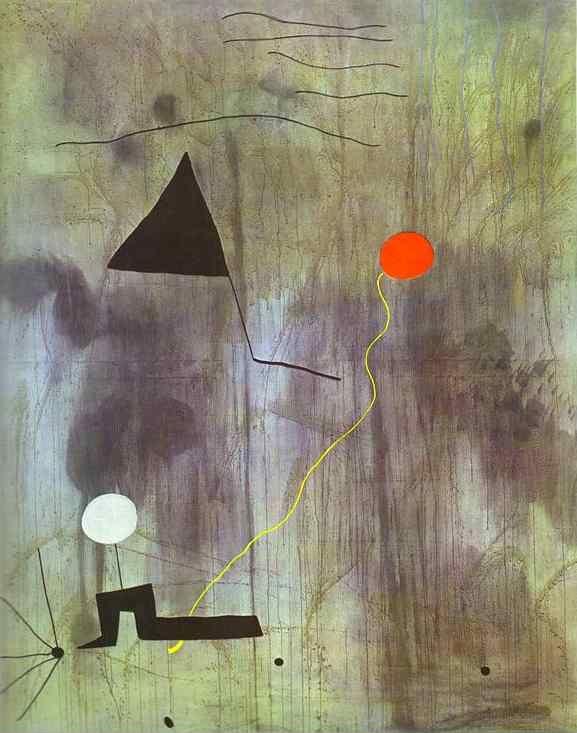
- "Joan Miro: Selected Paintings" - Smithsonian Institution (this one is mostly legit, as I'm supposed to write a poem about a piece of art for my creative writing class)
- "Leisure and Culture" - Chris Rojek (completely unnecessary, but how could I resist a chapter entitled "The Abnormal Forms of Leisure"?)
- "The Philosophy of Sustainable Design" - Jason F. McLennan (I'm hoping this will be one of those books that has an introduction or first chapter that explains all the issues and thus allow me to feel intelligent about something of which I know nothing)
- "Dwellings: The House across the World" - Paul Oliver (there are a lot more possibilities than just the suburbs)
- "Diagrams: A Visual Survey of Graphs, Maps, Charts, and Diagrams for the Graphic Designer" - Arthur Lockwood (these are bizarre, hilarious, interesting, profound, quirky, etc. etc.; there are so many ways to convey information and to tell stories)
four books in preparation for the independent publishing house John and I are going to start while in York, don't you know it:
- "Simple Printmaking with Childern" - Daniels/Turner (okay, starting off modestly)
- "Exploring Printmaking for Young People" - Daniels/Turner (working our way up)
- "Hand Printmaking" - Hargreaves
- "The Alternative Printing Handbook" - Chris Treweek and Jonathan Zeitlyn with the Islington Bus Co.
I guess I'd better get reading...
2.11.2008
Tanka, Renga, Jesei

Anyways, right after class, I went over to the library and checked out a few anthologies: one of specifically modern Tanka poetry, one a collection of the more popular Haiku form, and one more historically-focused anthology by Penguin Books. I would especially recommend the first of these, "Modern Japanese Tanka" edited and translated by Makoto Ueda, especially its easy-to-read and highly-informative Introduction.
Hanging from the bows
Of an old rusty vessel
Tied to the pier,
The black shadow of a cross
falls on the neon red sea.
I've since talked a little more to Mr. Nakamura (he very kindly gave me a free copy of his book) in order to write a short piece on it and Tanka poetry in general, perhaps for "Chimes" or something like that. It was very encouraging to discover this unique resource and opportunity amidst the new, sometimes stifled-seeming academic atmosphere here at YSJ. I would point anyone that might be interested in Tanka poetry to the homepage of the society Mr. Nakamura heads up: Anglo-Japanese Tanka Society.

